Legendary Poems... and Permission to Play in them
A legend is a story that contains – or was believed to contain – a grain of truth. So it might be a story about a person who really existed: a queen, an outlaw, an acrobat, a saint. Or it might be about a place we can visit: a clifftop, castle or cavern. Some of the greatest poets have had fun climbing inside legends and rearranging the furniture, and it’s so fun to let children know that they can do the same.
I love giving school talks with exactly this message, and have an illustrated talk for years 3-6. We think about the difference between myths and legends, and how legends have sprung up around real people and events. We talk about quests, voyages and legendary lands, and about figures like King Arthur and Boudicca. We also look at the legend of Filey Brigg, which combines inspiration from the landscape and historical discoveries with dragons and cake!
We close with the World Cup of Legendary Beasts and Baddies where the children get to decide who wins as opponents including Morgan le Fay, Rita the Pirate and Spring-Heeled Jack face adversaries such as the selkie, the Loch Ness Monster and the Yeti. More information on my school events can be found here - do get in touch to discuss requirements and fees.
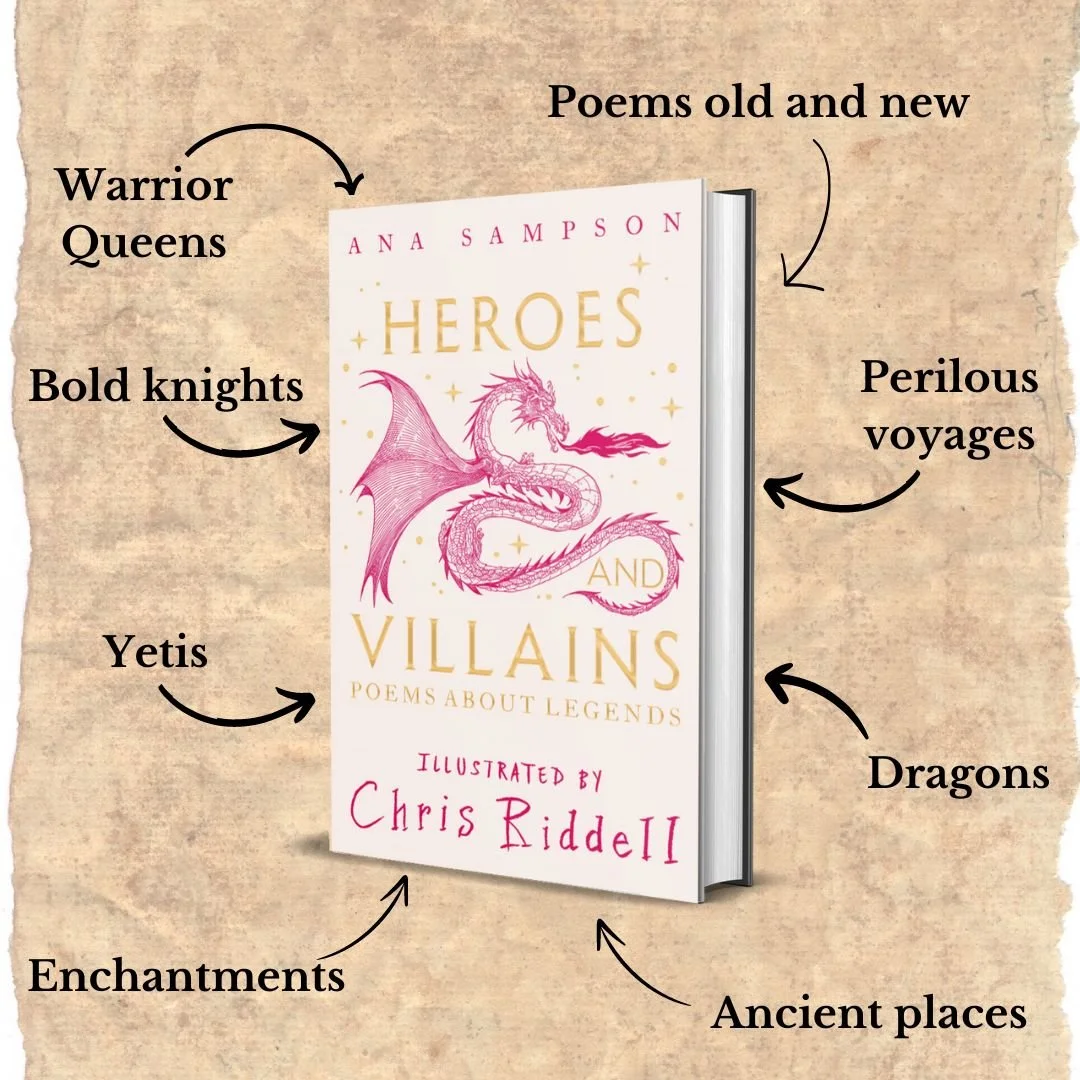
While I gathered legendary poems for the anthology, Heroes and Villains, a book packed with great stories and illustrated gloriously on every page by the amazing Chris Riddell, I was surprised and intrigued researching the tales themselves.
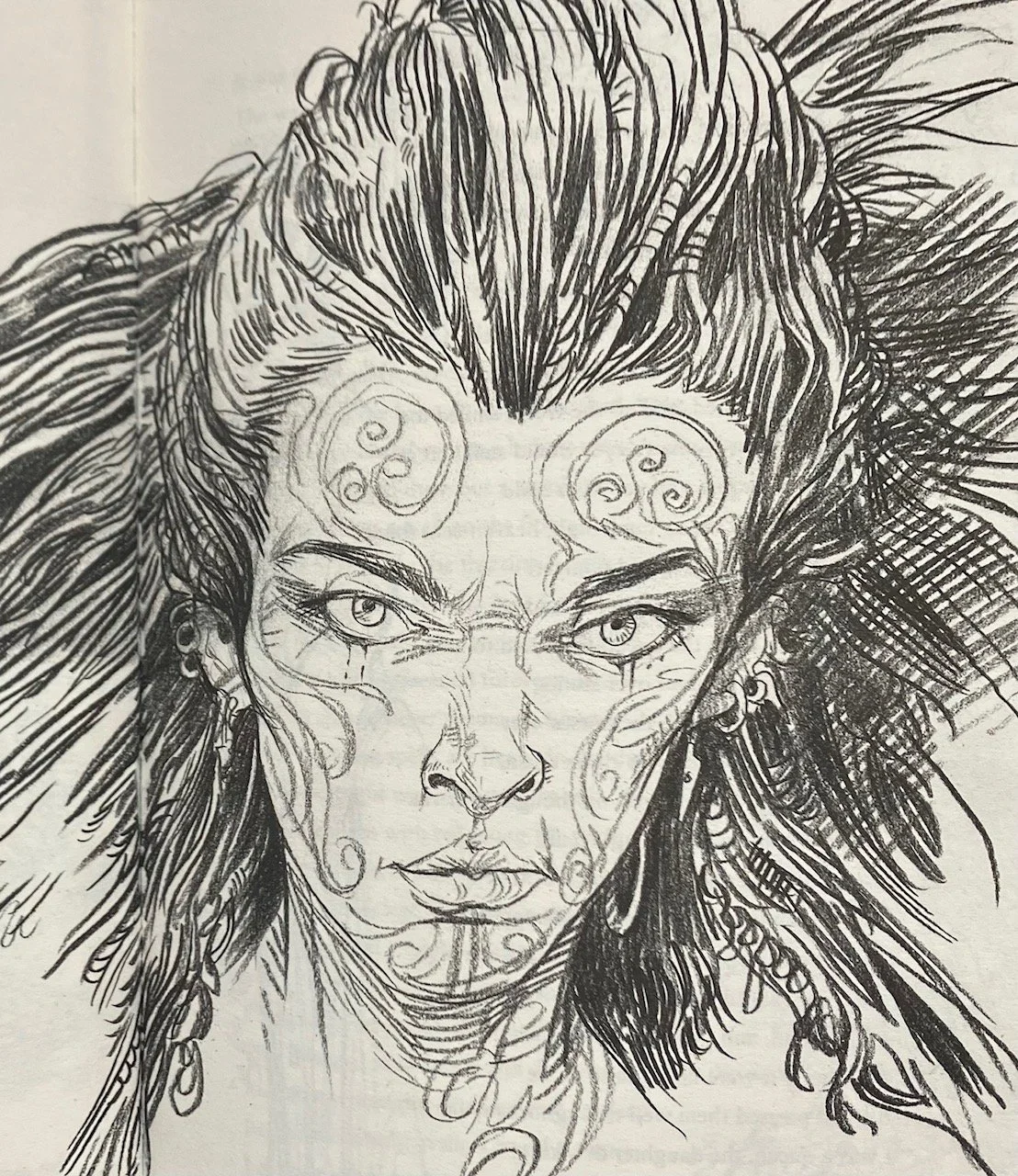
Boudicca, by Chris Riddell (Heroes and Villains)
Boudicca
Leader of the ancient British tribe of the Iceni, Boudicca led a valiant but unsuccessful uprising against the invading Roman forces in around AD 60. Her legend though, is far from dead. A rumour started in the twentieth century that she was buried under Platform 10 at King’s Cross station, which serves her home turf of Cambridgeshire. Convenient!
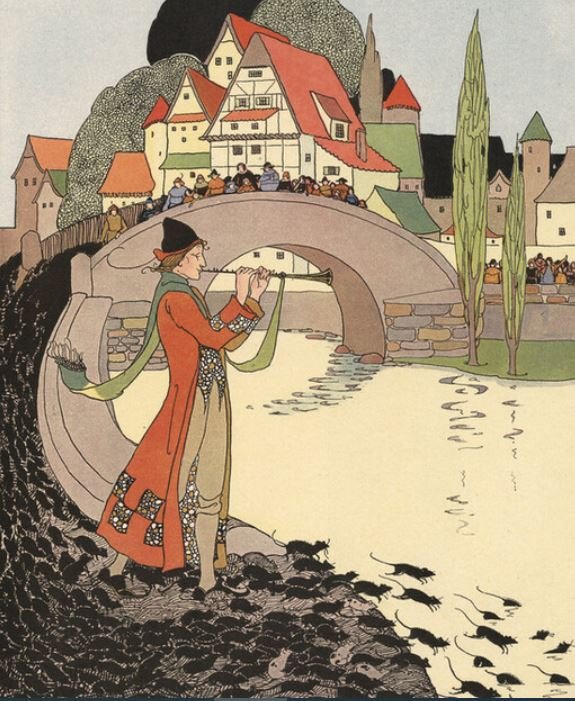
The Pied Piper
The tale of the musician who rids a town of rats, goes unpaid and, in revenge, leads the town’s children away is known to every young reader. It has passed through many hands, including those of the Brothers Grimm and Robert Browning, whose famous poem tell us that
‘… out of the houses the rats came tumbling.
Great rats, small rats, lean rats, brawny rats,
Brown rats, black rats, grey rats, tawny rats,
Grave old plodders, gay young friskers,
Fathers, mothers, uncles, cousins,
Cocking tails and pricking whiskers…’
In Hamelin where the restaurants serve rat-themed dishes (yum!) and a Piper cosplays the legend daily, a plaque dating to 1602 reads:
“A.D. 1284 – on the 26th of June – the day of St John and St Paul – 130 children – born in Hamelin – were led out of the town by a piper wearing multicoloured clothes. After passing the Calvary near the Koppenberg they disappeared forever.”
The town’s chronicle for 1384 has the brief but haunting reference: “It is 100 years since our children left.” (The rats don’t appear until the sixteenth century.) Theories include economic migration; the impact of the devastating Black Death; the 13th Century ‘Children’s Crusade’ to the Holy Land or even an instance of the ‘dancing plague’ which caused its feverish victims to caper, possibly even to nearby areas, before they dropped. It’s impossible to know what the truth might have been… but the Piper’s fame is undimmed.
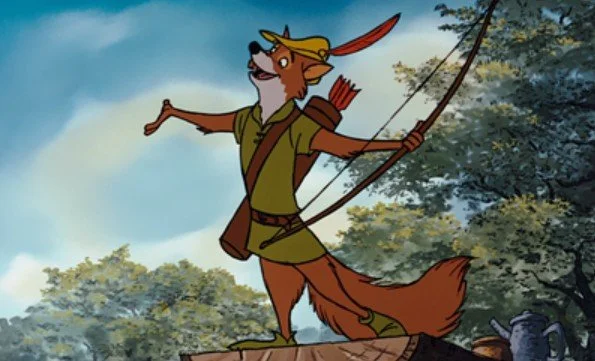
Still the dreamiest Robin Hood
Robin Hood
Robin wends his way from medieval ballads all the way to Hollywood and tight-clad universal fame. Various elements are stitched onto his stories over the centuries: Marian is a late, probably Victorian innovation, as is the idea that Robin is a dispossessed nobleman. Friar Tuck was a real fifteenth century figure whose story gets entwined with Robin’s, providing some comic relief.
Shakespeare gives him a mention, Walter Scott embroiders the tales, lobbing in some Norman/Saxon warfare and Shelley’s friend Thomas Love Peacock introduces a love triangle with the Sheriff of Nottingham. Honestly, everyone has had a hand in this. His merrie ways annoy the Puritans, so he falls out of favour for a bit, but the Victorians get back into him in a big way.
One of the ballads has Robin being bled to death by a wicked Prioress. As he lay dying, he shot an arrow from the window and faithful Little John promised to bury him where it struck. An ancient stone at Kirklees Abbey is said to be this tomb — although we are stretching the stories until they squeak by this point!
Many believe Robin was real, although scanning court documents for naughty outlaws hasn’t proved his existence just yet, but whatever the story’s roots really are, he has captured the imagination for hundreds of years – and we are free to reimagine him in any way we see fit, because legends belong to everyone. And who better than poets young and old(er!) to bring them to fresh, new life.
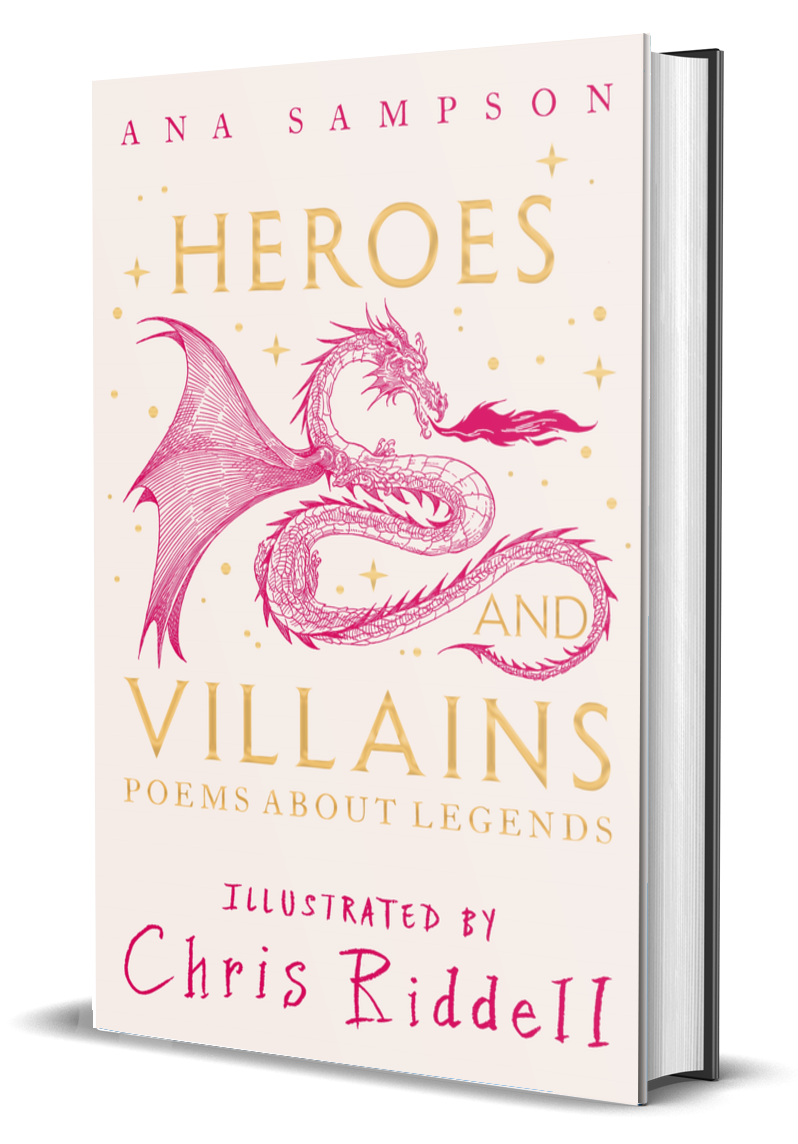
Heroes and Villains: Legendary Poems is full of poems - classic and modern - that climb inside old stories and rearrange the furniture. It’s available to order now from your local bookshop or online.
I’m now taking bookings for school visits for the new academic year (with a focus on London and the South East) - please get in touch here for details and fees.