Book Review: After the Storm, by Emma Jane Unsworth

I was sent an early proof for this honest and brilliantly written memoir. I came to it with no expectation, really. I haven’t read Emma’s novels - Animals and Adults - though I’ll certainly seek them out now. Also, I didn’t suffer from Post-Natal Depression. Oddly, I didn’t even experience the dreaded ‘third day blues’ on which, I was warned by other women and our NCT teacher, our milk would flood in and we’d cry all day. I suspect that this was partly because I simply didn’t have the energy to process anything at the time.

After The Storm.jpg

I had what I now consider to be an averagely traumatic first birth. There was a worry about my daughter’s heartbeat and after some toing and froing I was given an emergency c-section during which I lost two and a half litres of blood. Almost half of it, apparently. I’m forever grateful to the serene and efficient theatre team and the fact that my spinal anaesthetic meant I couldn’t see the gory floor. The loss wasn’t quite enough to need a transfusion - though I was dimly aware through my opiate high of someone ‘getting the blood guy on the phone’ - but more than enough to leave me wraith-like for some time afterwards. Often, when I first woke, I couldn’t move my legs. A day or so in, after a fierce battle to swim up from unconsciousness, I was so weak I convinced myself I was dying and calmly instructed my husband to call an ambulance because someone would need to feed the baby. Fortunately, it turned out I just needed to be fortified with some apple juice and a piece of toast, but those early days weren’t a breeze.

Despite escaping PND, though, so much of this extraordinary book rang true with me. The subtitle is Post-Natal Depression and the Utter Weirdness of New Motherhood, and I don’t think there’s any mother who won’t relate to at least some of what Emma so eloquently articulates. She vividly recalled to me how my daughter’s screaming induced pure animal panic in me, how once it started - and there were months during which it seemed it barely paused - I could think of nothing but stopping it. I remembered the well-meaning people who kindly reassured me they didn’t mind the anguished howling while I strained out a smile, inwardly screaming, “I MIND! SHE BLOODY MINDS! JUST LISTEN TO HER!” Every moment my baby was quiet I felt equal to the alien new blue-collar job of motherhood. And every moment she was screaming - so many moments, they smeared into weeks - I knew that what was being asked of me all day, every day, half the night, every night was impossible.

Photo credit Alex Lake / TWO SHORT DAYS

Photo credit Alex Lake / TWO SHORT DAYS

The section where Emma tries to join friends for afternoon tea and the civilised world literally does not fit her anymore will stay with me forever. I vividly remember those occasions: bumping a laden buggy through squeezed-together tables, muttering apologies, praying for the nap to continue, with my seeping, sweating, unfamiliar new body squeezed into weird new clothes with extra holes in. The divorce between my work, my life, my mind and what I had previously considered my self was jarring. It felt permanent, although it proved not to be. I had been prepared on some level for the fug of exhaustion and the vomit-spiked hair, but not to feel incapable of finishing a sentence even in my head.

Emma writes with humour as well as with brilliant clarity. (I, too, resented the shrill and jumped-up Upsy Daisy for having her own bed on wheels to trundle around the Night Garden.) And she expresses things here that I have rarely seen written down about disappointment, boredom, shame and rage. I’ve read and written a lot since editing Night Feeds and Morning Songs about mothers’ stories being routinely undervalued and dismissed, and about the difficulties mothers face in carving out time for their own careers and creativity. This piercing, fierce, raw and beautiful book will help go some way towards redressing that balance. It will change and perhaps even save lives.

I actually hadn’t expected to enjoy the newborn days as much as I did - I figured they’d be brutal and boring, and those low expectations were my friends whenever they were just that. But we are bombarded by images of ecstatic, subtly but impeccably groomed women, suffused with love, enjoying tranquil moments of deep connection with their beaming infants in beautifully appointed, airy, pastel-hued rooms. It’s easy to believe that hype, and the jarring shock when reality falls short - as it must do - is so, so damaging to women. It feels like ingratitude, weakness or self-indulgence to confess that we’re struggling. The scorching guilt of admitting that the deeply desired state of motherhood sometimes makes us feel stifled or furious or despairing prevents so many women from accessing the help and support they need.

The Best Most Awful Job.jpg

There has been a change, I think, in the way we talk about these things. The excellent essay collection The Best Most Awful Job, edited by Katherine May, struck a chord with many women with its truthful takes on the madness of child-wrangling, and I especially loved Saima Mir’s essay on maternal rage. This recent advertising campaign for Portal - showing a woman struggling with breastfeeding - had me in tears and time-travelling back to my daughter’s earliest days with its accuracy.

And After the Storm - this truthful, visceral, dazzlingly well-written memoir in which Emma shares her experiences of vulnerability, fury and desperation - experiences that I believe will resonate with many mothers - is an essential contribution to this discussion. I cannot thank her enough for writing it.

After the Storm: Postnatal Depression and the Utter Weirdness of New Motherhood by Emma Jane Unsworth is published by Profile Books.

Night Feeds and Morning Songs: Honest, Fierce and Beautiful Poems about Motherhood, edited by Ana Sampson, is published by Trapeze.

Please note this blog post includes affiliate links to Bookshop.org, which supports independent bookshops, and if you buy through them I earn a small commission (at no extra cost to you.)

The Best Feminist Audiobooks

I really enjoyed looking back on some of my favourite fiction audiobooks, so I thought I’d also pull together a list of audiobooks with a feminist flavour that I recommend.

Invisible Women.jpg

Invisible Women by Caroline Criado Perez

This was riveting and frankly horrifying. Criado Perez shows how our cities, medicine and societies are built around a model that only takes account of a default male participant and how the staggering gender data gap impacts on women all around the world. From toilets to transport, it left me enlightened and enraged and - oddly - relieved in some ways to understand to what an extent this world is not designed for me. Gobsmacking and essential.

The Handmaid's Tale.jpg

The Handmaid’s Tale by Margaret Atwood

This is a spectacularly good audiobook, narrated by Elisabeth Moss. I read The Handmaid’s Tale when I was around fourteen but it is infinitely more chilling, on every possible level, to me now. Because: life and also: the world. I now picture the scenes of the book in a way that’s entirely informed by the excellent television series - and hearing Elisabeth’s narration reinforced that - but it was so brilliantly done I can live with that. Compelling, astute and terrifying.

The Witches.jpg

The Witches by Stacy Schiff

I am absolutely fascinated by witch trials and Stacy’s masterful non-fiction study of the events in Salem is a great deep dive (although it is long, be warned!) It’s read well by Eliza Foss and really delves into the complex power balances of the story. In a puritan society in which women were restricted and impotent on so many levels, a group mostly composed of teenage girls managed to send Salem spinning - with the majority of the trials’ victims also being women.

Why I'm No Longer Talking To White People.jpg

Why I’m No Longer Talking To White People About Race by Reni Eddo-Lodge

The chapter about feminism in this seminal book was a wake-up call for me on intersectionality. Reni offers a concise history of how women of colour have often found themselves excluded from feminist movements and underlines why feminists cannot ignore other structural inequalities, including that of race, when campaigning for equality.

More than A Woman by Caitlin Moran

Aimed squarely at middle aged mums, this hit the mark so acutely for me. There’s lighthearted stuff - I have switched to knee socks at her recommendation and it’s a game changer - but also plenty of moving and serious material about ageing and parenting, particularly about her daughter’s difficult teenage years. The acknowledgement of unseen work done by women felt both buoying and somewhat (yes, still!) revolutionary. I loved it. Sign me up for Hag Club, I say.

Difficult Women.JPG

Difficult Women by Helen Lewis

This was a really interesting listen, which filled me in on some formidable women and campaigns I hadn’t been aware of. I also found myself gasping often at how recently various shockingly oppressive laws had been repealed. Difficult Women covers marriage, sex, work and politics and it’s lively as well as informative.

Feminine Mystique.jpg

The Feminine Mystique by Betty Friedan

I was inspired to listen to this seminal 1963 book by watching the excellent Mrs America on iPlayer. The ‘feminine mystique’ was the idea sold to American women of the 1950s that their ultimate fulfilment would come from devoting themselves entirely to their homes and families. Women were actively discouraged - by legislation, social pressures, advertisers, educators and the male-dominated media - from taking up careers themselves. Some of her conclusions feel dated (the chapters on sex, especially) but it remains shocking, acute and deeply researched. It’s a very interesting piece of feminist history with elements that still feel shockingly relevant over half a century later.

She is Fierce audio.jpg

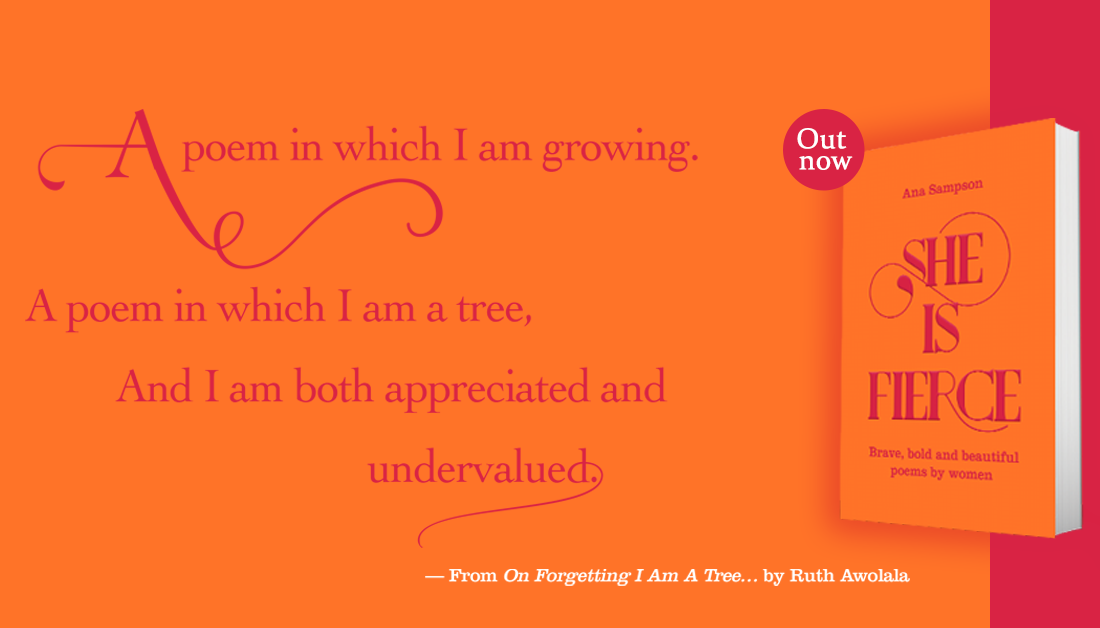
She is Fierce

Finally and cheekily, there is a splendid audiobook of She is Fierce, which I edited, read by Adjoa Andoh (who appears in my current obsession Bridgerton as Lady Danvers) utterly beautifully. Although many of the women from previous centuries wouldn’t recognise our idea of feminism, collecting these verses and those in She Will Soar felt like a feminist project to me - especially when I researched the poets and found out how much was stacked against women writers of the past, which explains what a wall to wall sausage-fest the literary canon is.

Please note there are affiliate links in this article and I may earn a small commission (at no extra cost to you) when you buy through them.

World War Two Reading Recommendations

Revisiting my blog about ‘Strange Meeting’ led me to thinking about how books and poetry have brought war to life for me in a way that studying history never could, so I thought I’d gather some of my recommendations for books set during World War II. I have my eye on The Night Watch by Sarah Waters, because I love her books but have somehow never read that one, but let me know if there are other books set in the period I should look out for.

Testament.jpg

Testament by Kim Sherwood

I was lucky enough to work on the publicity for this astonishing debut novel, which won Kim the Bath Novel Prize and saw her shortlisted for the Sunday Times Young Writer of the Year. After her beloved grandfather’s death, Eva uncovers his hidden history as a survivor of the Holocaust in Hungary. It’s tender, beautifully written, humane, absorbing and deeply important. There’s a country we can almost recognise that welcomed child survivors of the Nazi camps to the Lake District to heal, and it’s a story that will stay with me forever.

Life After Life.jpg

Life After Life by Kate Atkinson

Not exclusively set during World War Two, but partly so, and this is one of my favourite books of all time. I could also include the sequel A God in Ruins - though it was a little plane-heavy for me - here. It’s an exquisite novel in which a baby born in a snowstorm in 1910 has the chance to live through the twentieth century again and again - a conceit Atkinson pulls off with dazzling dexterity. An unmissable book.

Transcription.JPG

Transcription by Kate Atkinson

So good I include her two and a half times! Transcription is witty and knowing and rattles along at a brilliant pace, all cigarette smoke and paranoia and lacklustre sandwiches in 1940s London. This tale of covert MI5 operations flicks between Dolphin Square and the shabby corridors of the post-war BBC. The bewildering, half-farcical web of agents all over London is entertainingly sketched - the loyalties and motivations of most of the characters (and half the passers by) are questionable at best. And the language is period-perfect, all smart, clipped retorts and elegant slang.

The Nightingale.jpg

The Nightingale by Kristin Hannah

It took me a while to warm up to this book - I found the opening a bit cheesy - but I ended up completely gripped and invested in this story of the fates of two sisters set in Occupied France during World War II. Aspects of the plot are based on real events and Hannah’s depiction of the horrors of war is shocking and haunting. I enjoyed it far more than The Alice Network, also set in Occupied France - partly because I am British and of a certain vintage and therefore couldn’t take an evil cafe owner called Rene seriously. (I bid Good Moaning to everyone who got this reference.)

The Lion The Witch and the Wardrobe.jpg

The Lion, the Witch and the Wardrobe by C S Lewis

I’m stretching a point here as obviously most of the action takes place in Narnia, but the war casts a long shadow over this book, published in 1950. As a child, I didn’t spare a thought for the parents in London whose children, like the Pevensies, were evacuated to the countryside to stay in the homes of strangers - something that strikes me as unbearably poignant now.

Our Man in New York.jpg

Our Man in New York by Henry Hemming

Another book I was lucky enough to work on, this is non-fiction so gripping it reads like a novel, telling the true history of the Fake News and cunning tricks used by MI6 to bring America into the Second World War, from setting up a Canadian forgery factory to paying astrologers to protect Hitler’s death. Le Carré meets Mad Men, this book manages to increate incredible tension despite the fact we know the ending - and there are plenty of lessons for today, as questions about governments interfering in other nation’s political processes continue to be raised.

Also recommended:

Alone in Berlin by Hans Fallada - incredibly powerful story of one man’s resistance to the Nazi regime

If This Is A Man by Primo Levi - the essential, unforgettable memoir of Levi’s time in a Nazi concentration camp

Suite Française by Irène Némirovsky - an incredibly moving novel written and set in Occupied France, published after the author’s death in Auschwitz

The Book Thief by Marcus Zuzak - inventive, beautifully written and deeply affecting novel which also celebrates the redemptive power of books

Catch-22 by Joseph Heller - surreal and darkly funny, and responsible for making me think of ‘crab-apple cheeks’ every time I see a crab-apple tree

Slaughterhouse-Five by Kurt Vonnegut - powerful and strange novel with science-fiction elements about the Allied bombing of Dresden

Atonement by Ian McEwan - I love this novel, and reading it while we lived in Balham (back when Balham was much less posh) made it extra poignant

Coming in your ears

I’m SORRY it was juvenile (as well as dating me) to use that Phoenix Nights quote as a heading but I just couldn’t think of anything else once it had occurred to me. Anyway, I thought I’d put together some audiobook recommendations - here’s some of the fiction I’ve enjoyed listening to.

The Immortalists.jpg

The Immortalists by Chloe Benjamin

This novel is brilliantly read by Maggie Hoffman. The four Gold children visit a fortune teller who can, apparently, predict the date of your death, and the book follows each of their stories in turn. The characters are utterly believable, flawed and loving and anxious and driven and mixed-up. The low-key tragedies of families drifting apart, disappointment and missed chances to connect are hauntingly written - I definitely had a tear in my eye a few times - but there is a humour and warmth and tenderness too. Brilliant writing, beautifully brought to life.

Maker of Swans.jpg

The Maker of Swans by Paraic O’Donnell

I LOVE Paraic’s writing and this book was brilliantly narrated by Mike Grady and Imogen Wilde. The fantastical elements of the story are utterly convincing and it’s stuffed with wonderful characters, deft touches of wry humour, intriguing mystery, tension and just absolutely delicious writing. So playful and enjoyable, it reminded me of Jonathan Strange and Mr Norrell by Susanna Clarke - an enormous compliment in my book. Imogen Wilde’s voice is just spellbinding and I’d like her to read me a bedtime story nightly, please.

Darling.jpg

Darling by Rachel Edwards

This was such a gripping listen. The central characters - Darling and her teenage stepdaughter Lola - are so compelling, so vividly and skilfully written. This is a novel with so much to say about Britain today, about prejudice, trauma, family and about love. It also boasts some brilliant flashes of humour - the schoolfriend’s mum who ‘over-Bodens’ had me snorting - and some spectacularly mouthwatering passages about cooking (someone give Rachel a food column please!) The narration by Jaimi Barbakoff and Adele Oni is absolutely pitch perfect.

Normal People.jpg

Normal People by Sally Rooney

She’s a damn wizard. I resisted this book at first - so hyped and it sounded a bit too like One Day to me (I know, I know, everyone but me loved One Day). I was an idiotic boob, because it’s a wonderful, achingly sharp book and a great audiobook - I loved Aoife McMahon’s narration. Connell and Marianne are 100% real to me and I’ll fight anyone who dares suggest they are actually fictional characters. I was so anxious about the television adaptation but in my view they absolutely nailed it. Ooooh I could watch that again, pretty much weekly.

The Memory Chamber.jpg

The Memory Chamber by Holly Cave

Thriller, love story, sci fi - this book has everything and I loved the narrator, Isobel, voiced by Imogen Church. She’s a heaven architect, designing artificial heavens for wealthy clients in a future that feels very plausible and close. It’s so thought-provoking: I kept speculating about the sights, sounds, smells and experiences that would be in my heaven, from roasted garlic through late summer evenings and mid-90s shoegazing indie to a warm cat purring on my lap and my kids giggling. It’s such an intriguing, brilliantly realised concept.

Daisy Jones.jpg

Daisy Jones and the Six by Taylor Jenkins Reid

The multiple narrators for this fictional ‘rockumentary’ meant it worked really well in audio - I felt I would have got mixed up between characters in the print edition but the ensemble cast brought them all to life so well. I loved this. The concept was so perfectly executed. Though I did feel it slightly flagged in the middle, the final chapters had me absolutely spellbound. Camila and Karen forever. If you liked this, look out for The Final Revival of Opal and Nev coming in 2021.

Please note that this website contains affiliate links and I may earn a small commission (at no cost to you) when you buy through these links.

Hot reads for summer days

I LOVE hot weather. You’ll find me basking like a lizard at any opportunity I get, ideally with a gin and tonic and a book. This fantasy scenario happens a lot less frequently than I’d like, but in the event that you manage to secure yourself some summer reading time, here are some of my favourite hot weather reads.

The Tyranny of Lost Things.jpg

The Tyranny of Lost Things

I really enjoyed this book by Rhiannon Lucy Cosslett set during a sultry London summer. It’s brilliantly atmospheric - she absolutely nails the sticky restlessness of a city summer in your twenties. Zadie Smith’s NW is also excellent at bringing summer in London to life.

Under the Volcano.jpg

Under the Volcano

Malcolm Lowry’s bonkers masterpiece is a surreal book about the final days of an alcoholic diplomat in Mexico and much more entertaining than that sounds. It’s stifling and mythic and many layered - I know, because I was fool enough to write my Masters dissertation on it. There’s a brilliant Backlisted podcast about it featuring poet Ian McMillan that is well worth listening to if you’re already a fan. One for a sweltering afternoon, perhaps with a glass of mezcal - though, given the infernal effects on Firmin, I’d stop at one.

Cape May.jpg

Cape May

I gobbled up Chip Cheek’s Cape May, which is comprised of a dash of Gatsby-flavoured glamour, a seasoning of sun and sea, a slosh of gin, a squeeze of sex, and a twist of sadness. Crisply written and completely transporting, it’s begging for an elegant veranda with a sea view on which to enjoy it, with a short dress and a long drink.

Ace of Bass

The opening poem in Fiona Benson’s absolutely excellent Vertigo & Ghost is the frenetically sticky ‘Ace of Bass’ (certainly the sound of a few of my formative summers). Hear Fiona read it here, and wonder whether anyone - even actual Ace of Bass - has ever captured the hormone-addled frenzy of schoolgirls in summer better.

The Girls.jpg

The Girls

Emma Cline’s scorching debut is a dark pleasure for a hot night. She evokes a gritty, strip-lit 60s with the nostalgic haze torn away. The Girls is scarily perceptive on girlhood, especially the need to belong and the dark places this can lead to.

Let’s hope we have a few more scorching days and warm evenings ahead of us. I’d love to know your top heatwave reads, and I might revisit this subject again as I have a few other sizzling suggestions that didn’t make this list.

Please note that this website contains affiliate links and I may earn a small commission (at no cost to you) when you buy through these links.

I have been talking about poetry again...

Despite being stuck at home, my appetite for talking about poetry (or just talking to adults, full stop) is undimmed, so I’ve had to get my fix online! If you’re in the market for some poetry discussion, I talked to the wonderful Kate Halabura of Wandsworth Town Library. We had planned an event at the library in March but it was not to be, so it was lovely to chat with Kate via Zoom instead about She is Fierce and the hidden history of women’s poetry. You can see our chat below.

I also had the enormous pleasure of interviewing William Sieghart, author of the glorious Poetry Pharmacy books, for the Chiddingstone Literary Festival podcast. William is a poetry legend, and his books dispense thoughtful, perceptive advice on the perfect piece of poetry for whatever ails you - be it grief, loneliness or just not having enough pep for a party. You can listen to our conversation on the Chiddingstone Literary Festival website here. I’d love to interview more authors and poets so if you are looking for an event chair (online for the forseeable future, I guess) do get in touch.

Poetry Pharmacy.JPG

I’ve long been convinced that poetry is good for you (here’s me harping on about it some years ago in the Daily Express) and it’s an approach also taken by the marvellous Deborah Alma. As well as being an incredibly talented poet, Deb is the Emergency Poet, touring the country in a vintage ambulance with Nurse Verse, dispensing poems to ease your problems. Her anthologies The Emergency Poet and The Everyday Poet are two of my favourites, and she now runs a real life Poetry Pharmacy in Shropshire. I hope to visit in *the time after* but, for now, you can order from them online and even book an email or telephone consultation.

Poetry Pharmacy shop.JPG

Please note that this website contains affiliate links and I may earn a small commission (at no cost to you) when you buy through these links.